Vehicles using B16SHT LWC engine list:
Recommended oil for engine B16SHT LWC engine.
Ask AI about any Engine code
Questions strictly about engine codes (brand/model/engine type/production years).

| Castrol MAGNATEC 5W‑30 C3 | |
|---|---|
| SAE 5W‑30 | ✔ |
| ACEA C3 | ✔ |
| API SN/CF | ✔ |
| BMW Longlife‑04 | ✔ |
| MB‑Approval 226.5 / 229.31 / 229.51 / 229.52 | ✔ |
| Opel OV 0401547‑D30 / G30 | ✔ |
| Fiat 9.55535‑S3 | ✔ |
| Renault RN0700 / RN0710 | ✔ |
| VW 505.00 / 505.01 | ✔ |
| dexos2 | ✔ |

| Liqui‑Moly Chrome C3 5W‑30 | |
|---|---|
| SAE 5W‑30 | ✔ |
| ACEA C3 | ✔ |
| API SN/CF | ✔ |
| BMW Longlife‑04 | ❌ |
| MB‑Approval 226.5 / 229.31 / 229.51 / 229.52 | ✔ |
| Opel OV 0401547‑D30 / G30 | ✔ |
| Fiat 9.55535‑S3 | ✔ |
| Renault RN0700 / RN0710 | ✔ |
| VW 505.00 / 505.01 | ✔ |
| dexos2 | ✔ |

| Ridex Plus Active Energy C2/C3 5W‑30 | |
|---|---|
| SAE 5W‑30 | ✔ |
| ACEA C3 | ✔ |
| API SN/CF | ✔ |
| BMW Longlife‑04 | ✔ |
| MB‑Approval 226.5 / 229.31 / 229.51 / 229.52 | ✔ |
| Opel OV 0401547‑D30 / G30 | ✔ |
| Fiat 9.55535‑S3 | ❌ |
| Renault RN0700 / RN0710 | ✔ |
| VW 505.00 / 505.01 | ✔ |
| dexos2 | ✔ |
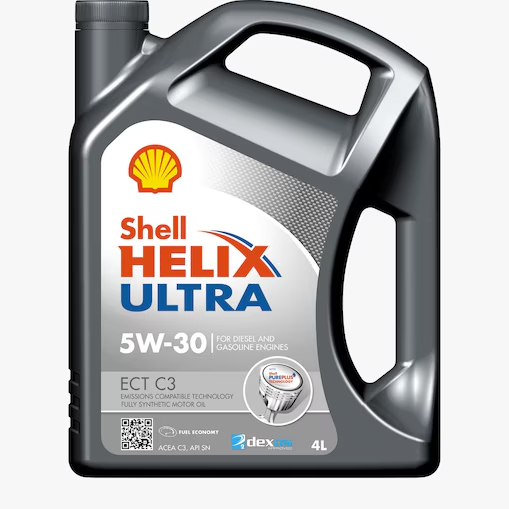
| Shell Helix Ultra ECT C3 5W‑30 | |
|---|---|
| SAE 5W‑30 | ✔ |
| ACEA C3 | ✔ |
| API SN/CF | ✔ |
| BMW Longlife‑04 | ✔ |
| MB‑Approval 226.5 / 229.31 / 229.51 / 229.52 | ✔ |
| Opel OV 0401547‑D30 / G30 | ✔ |
| Fiat 9.55535‑S3 | ✔ |
| Renault RN0700 / RN0710 | ✔ |
| VW 505.00 / 505.01 | ✔ |
| dexos2 | ❓ |
Oil specification key
✔ – Meets the required specification
❓ – Not explicitly stated (use caution; check your vehicle manual)
❌ – Does not meet required specification. Use may cause engine issues.
✔ – Meets the required specification
❓ – Not explicitly stated (use caution; check your vehicle manual)
❌ – Does not meet required specification. Use may cause engine issues.
As an Amazon Associate, we may earn from qualifying purchases.
Answer generated by AI.
Oil specifications for B16SHT LWC engine
SAE 5W-30
ACEA C3
API SN
VW 504.00
VW 507.00
Most common problems, symptoms & fixes for the B16SHT LWC engine.
Engine B16SHT LWC
Symptoms:
- Loss of power or hesitation during acceleration
- Rough idling or engine misfires
- Increased oil consumption or visible oil leaks
- Check Engine Light (CEL) illumination
- Unusual noises such as knocking or rattling from the engine bay
Diagnosis:
- Perform a thorough diagnostic scan to retrieve fault codes related to ignition, fuel system, or turbocharger performance.
- Inspect ignition coils and spark plugs for wear or damage, as misfires are common.
- Check for turbocharger boost leaks or malfunctioning wastegate actuators.
- Examine the intake manifold and intercooler for leaks or blockages.
- Inspect the PCV (Positive Crankcase Ventilation) system for clogging or failure, which can cause oil consumption and rough running.
- Conduct a compression test to rule out internal engine wear or damage.
Fixes:
- Replace faulty ignition coils and worn spark plugs to resolve misfires and improve combustion.
- Repair or replace leaking turbocharger hoses and ensure the wastegate actuator operates correctly.
- Clean or replace clogged PCV valves to reduce oil consumption and improve engine smoothness.
- Address oil leaks by replacing gaskets or seals, particularly around the valve cover and turbocharger.
- If compression test reveals issues, further engine repair or overhaul may be necessary.
- Regularly update engine software to the latest version to optimize performance and emissions.
Prevention:
- Adhere to the manufacturer’s recommended oil change intervals using high-quality synthetic oil to protect turbocharger and engine internals.
- Use the correct fuel grade to prevent knocking and maintain engine health.
- Avoid aggressive driving when the engine is cold to reduce stress on turbo components.
- Regularly inspect and maintain the air intake and PCV systems to prevent clogging and leaks.
- Schedule periodic diagnostic checks to catch early signs of ignition or turbocharger issues before they escalate.
Symptoms:
- Loss of power or hesitation during acceleration
- Rough idling or engine misfires
- Increased oil consumption or visible oil leaks
- Check Engine Light (CEL) illumination
- Unusual noises such as knocking or rattling from the engine bay
Diagnosis:
- Perform a thorough diagnostic scan to retrieve fault codes related to ignition, fuel system, or turbocharger performance.
- Inspect ignition coils and spark plugs for wear or damage, as misfires are common.
- Check for turbocharger boost leaks or malfunctioning wastegate actuators.
- Examine the intake manifold and intercooler for leaks or blockages.
- Inspect the PCV (Positive Crankcase Ventilation) system for clogging or failure, which can cause oil consumption and rough running.
- Conduct a compression test to rule out internal engine wear or damage.
Fixes:
- Replace faulty ignition coils and worn spark plugs to resolve misfires and improve combustion.
- Repair or replace leaking turbocharger hoses and ensure the wastegate actuator operates correctly.
- Clean or replace clogged PCV valves to reduce oil consumption and improve engine smoothness.
- Address oil leaks by replacing gaskets or seals, particularly around the valve cover and turbocharger.
- If compression test reveals issues, further engine repair or overhaul may be necessary.
- Regularly update engine software to the latest version to optimize performance and emissions.
Prevention:
- Adhere to the manufacturer’s recommended oil change intervals using high-quality synthetic oil to protect turbocharger and engine internals.
- Use the correct fuel grade to prevent knocking and maintain engine health.
- Avoid aggressive driving when the engine is cold to reduce stress on turbo components.
- Regularly inspect and maintain the air intake and PCV systems to prevent clogging and leaks.
- Schedule periodic diagnostic checks to catch early signs of ignition or turbocharger issues before they escalate.